Things to do in the Prosecco Hills, Italy
What makes prosecco special, and the best ways to spend a week in the hills between Conegliano and Valdobbiadene.
You’ve heard of Champagne, the region in France that gave the wine its name. So why have you never heard of the Prosecco Hills?
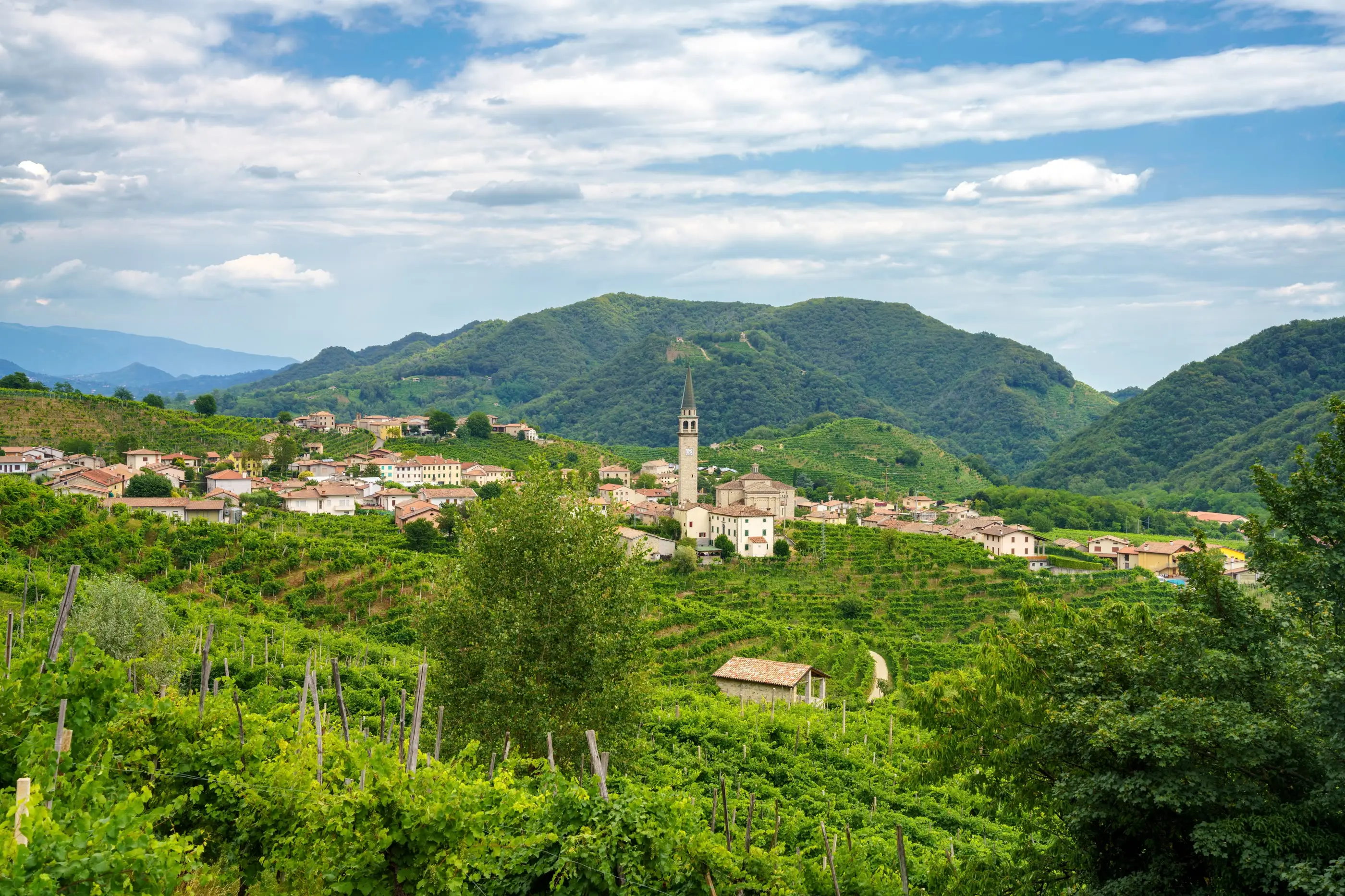
They stretch between the towns of Conegliano and Valdobbiadene, an area sometimes called “the secret garden of Venice.” This is the historic home of prosecco, and in 2019 the hills became a UNESCO World Heritage Site. Most of the world still hasn’t found them.
What is prosecco?
You probably already know prosecco as the sparkling wine in your glass (and in your spritz). The story behind it is less well known. In high school I interned at the winery in Conegliano that credits itself with making the very first prosecco. I gave visitors from all over the world tours and walked them through the history, so here’s the short version I used to give.
It starts in 1868, with a man named Antonio Carpenè. Veneto had always made wine, but Carpenè wanted to make something sparkling. He went to France to learn how it was done, then came home to try it with the local grape, glera. At first he even called it Italian Champagne, until France claimed the name for its own wine and the Italian version became prosecco.
The real difference is in the bubbles. Champagne gets its second fermentation inside each bottle. Prosecco gets it all at once, in a large stainless steel tank, which keeps the wine fresh, light, and young. Champagne is born bottle by bottle, and prosecco is born all together.
DOC vs DOCG
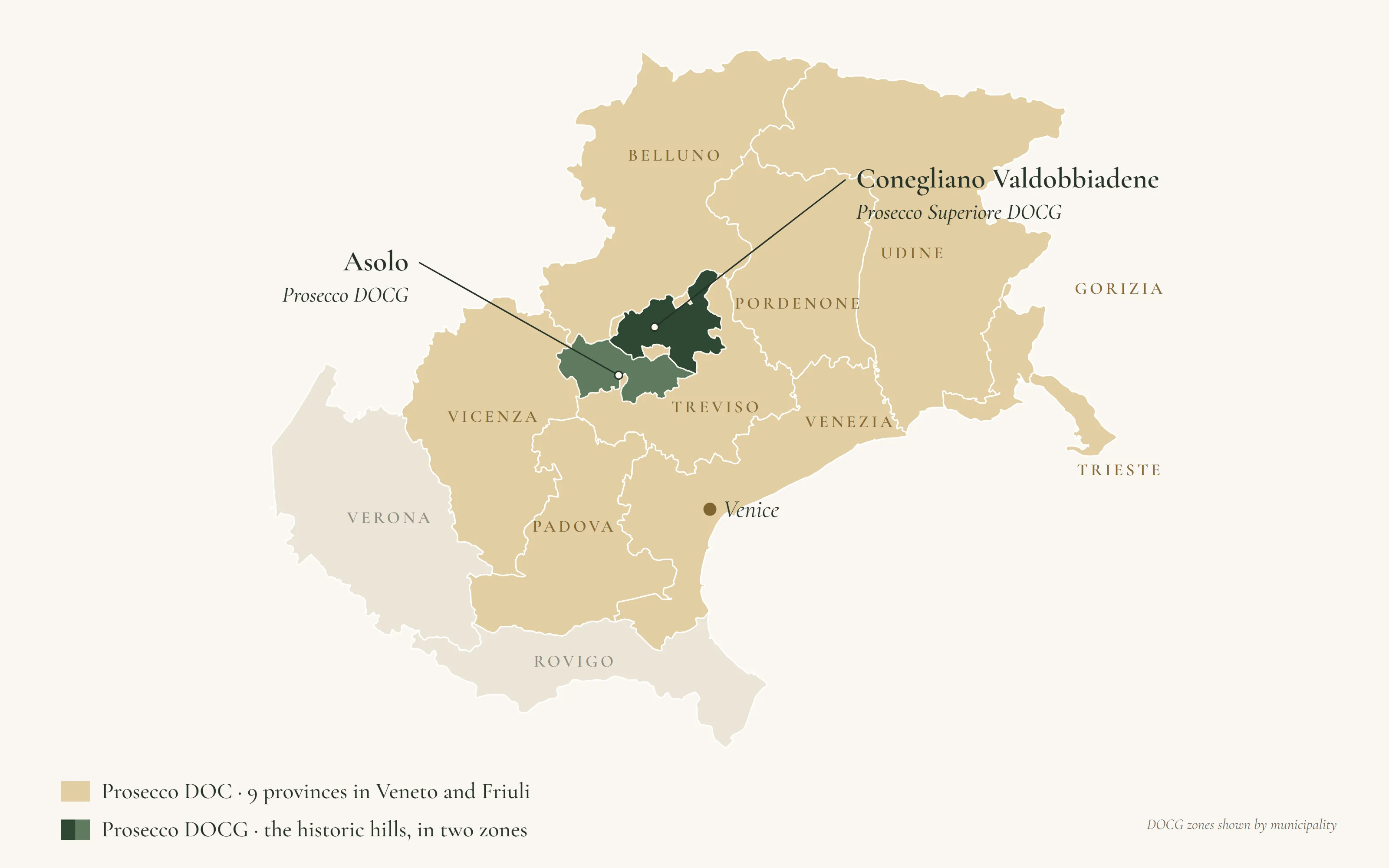
Not all prosecco comes from the hills. Most of what you find at home is Prosecco DOC, made across a wide stretch of flatter land in nine provinces of Veneto and Friuli.
The original, from the steep historic hills, is Prosecco DOCG, Italy’s highest quality label. It comes from two small zones, Conegliano Valdobbiadene and Asolo, and the bottles say Prosecco Superiore. Look for Rive on the label for grapes from a single steep slope, and Cartizze for the most prized hill of all.
Before your next glass
- Read the label backwards: “Extra Dry” is actually the sweeter one, and “Brut” is the drier one. I know, it trips everyone up, but now you know.
- Check the color: prosecco should be pale, almost clear. The deeper the color, the older the wine, and prosecco is meant to be drunk young.
- Pour it into a tulip glass: skip the narrow flute. A tulip-shaped glass, wide in the middle and narrow at the top, gives the wine room to breathe, so you catch the fresh fruit and flower notes. It’s what producers here pour it into, and once you try it, you won’t go back.
What to do in the Prosecco Hills?
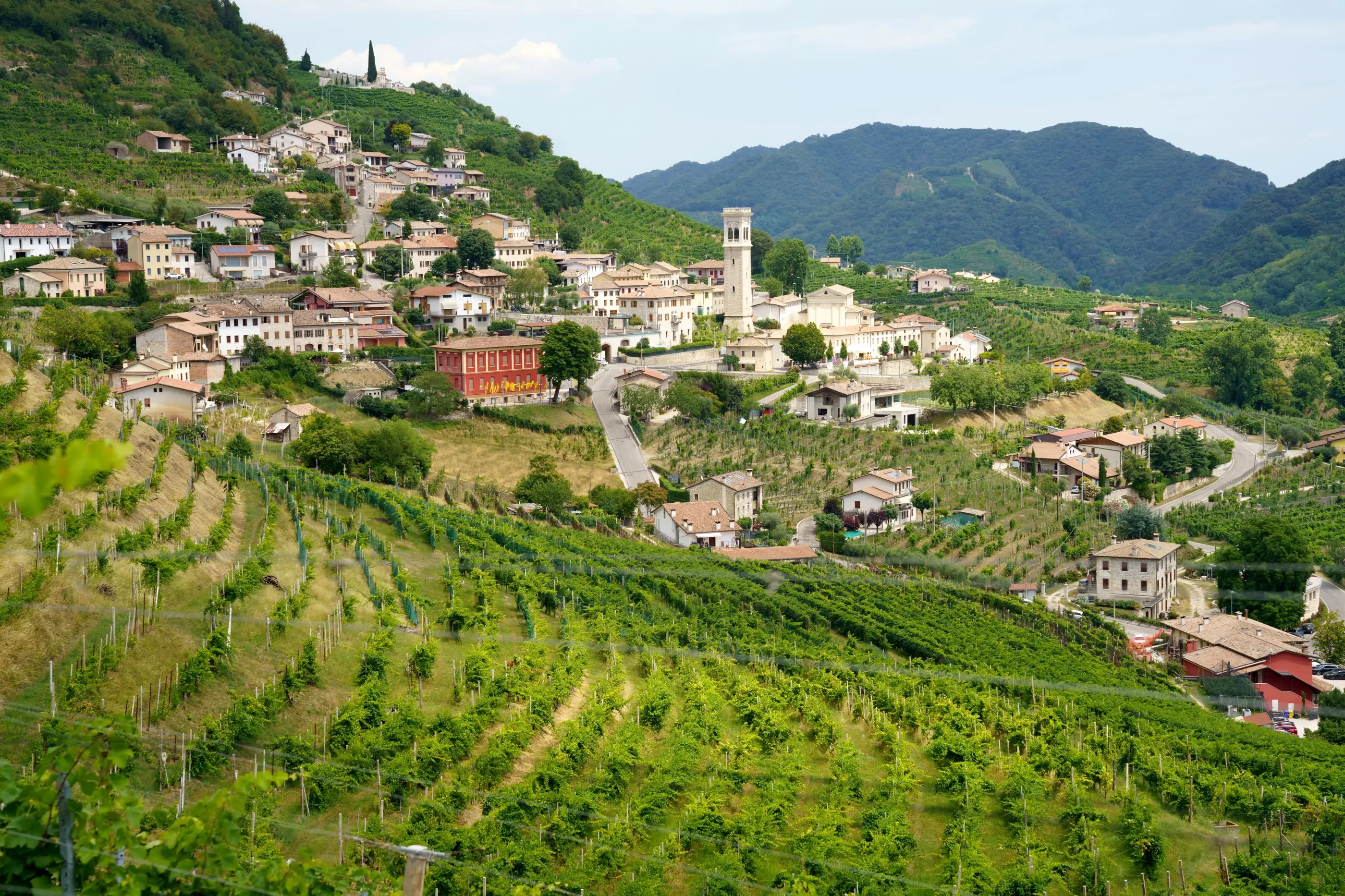
The best way to understand prosecco is to go where it grows. The hills here don’t roll so much as plunge, and that’s exactly what makes them so impressive to see.
Taste at a small family cellar Most of the wineries here are family-run, so the person pouring is usually the one who made the wine. You hear the story from the people who live it, all the work behind every bottle, and then you taste it. Our prosecco tastings take you to them.
Explore the hills by car, bike, or Vespa The Strada del Prosecco, created in 1966 as Italy’s first wine road, winds from Conegliano to Valdobbiadene past vineyards, church towers, and tiny villages. Drive it slowly and stop wherever the view tells you to, bike the paths along the ridges at golden hour, or, for the most Italian way of all, ride it by Vespa with the wind at your back. Let us arrange a Vespa tour.
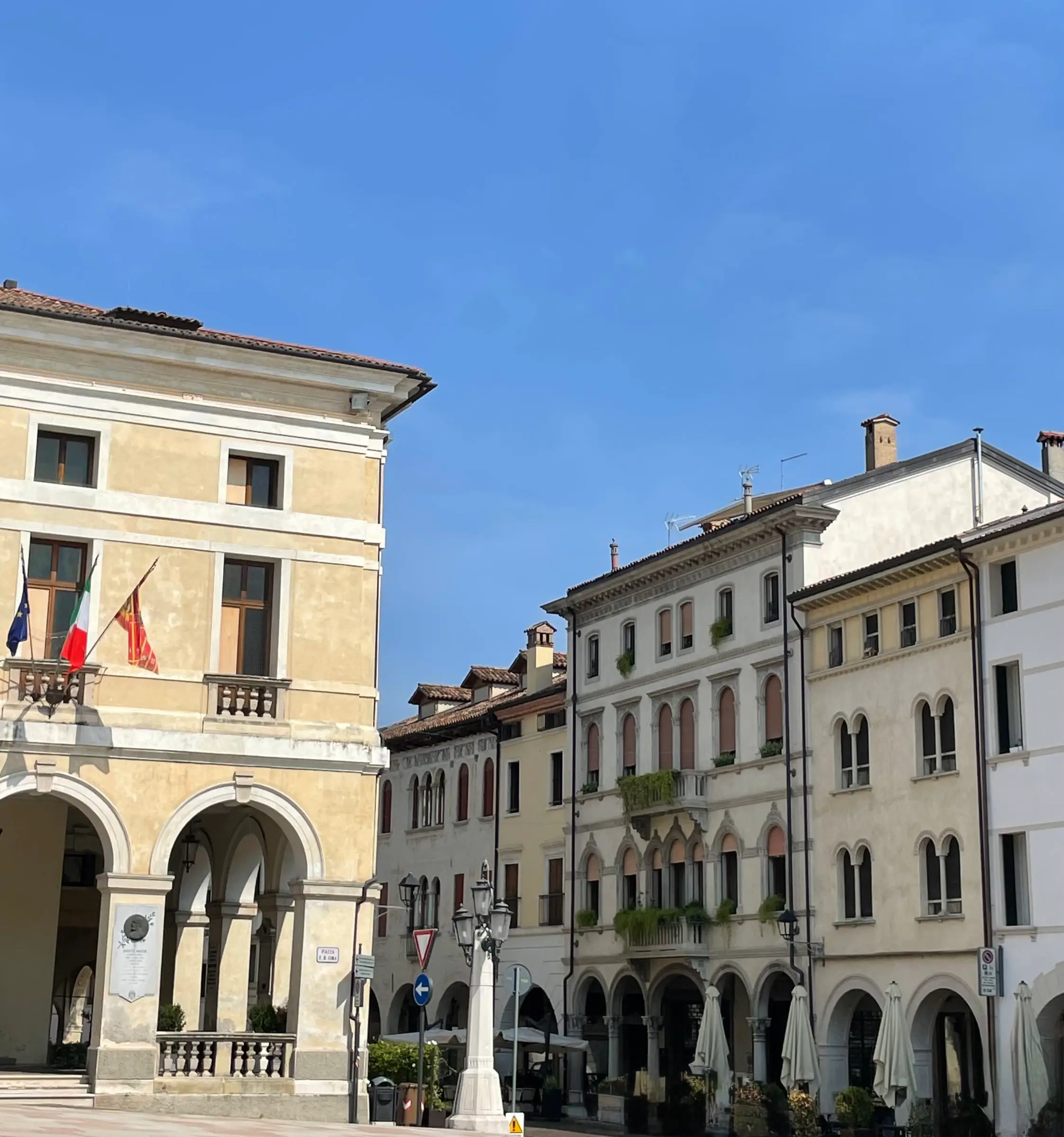
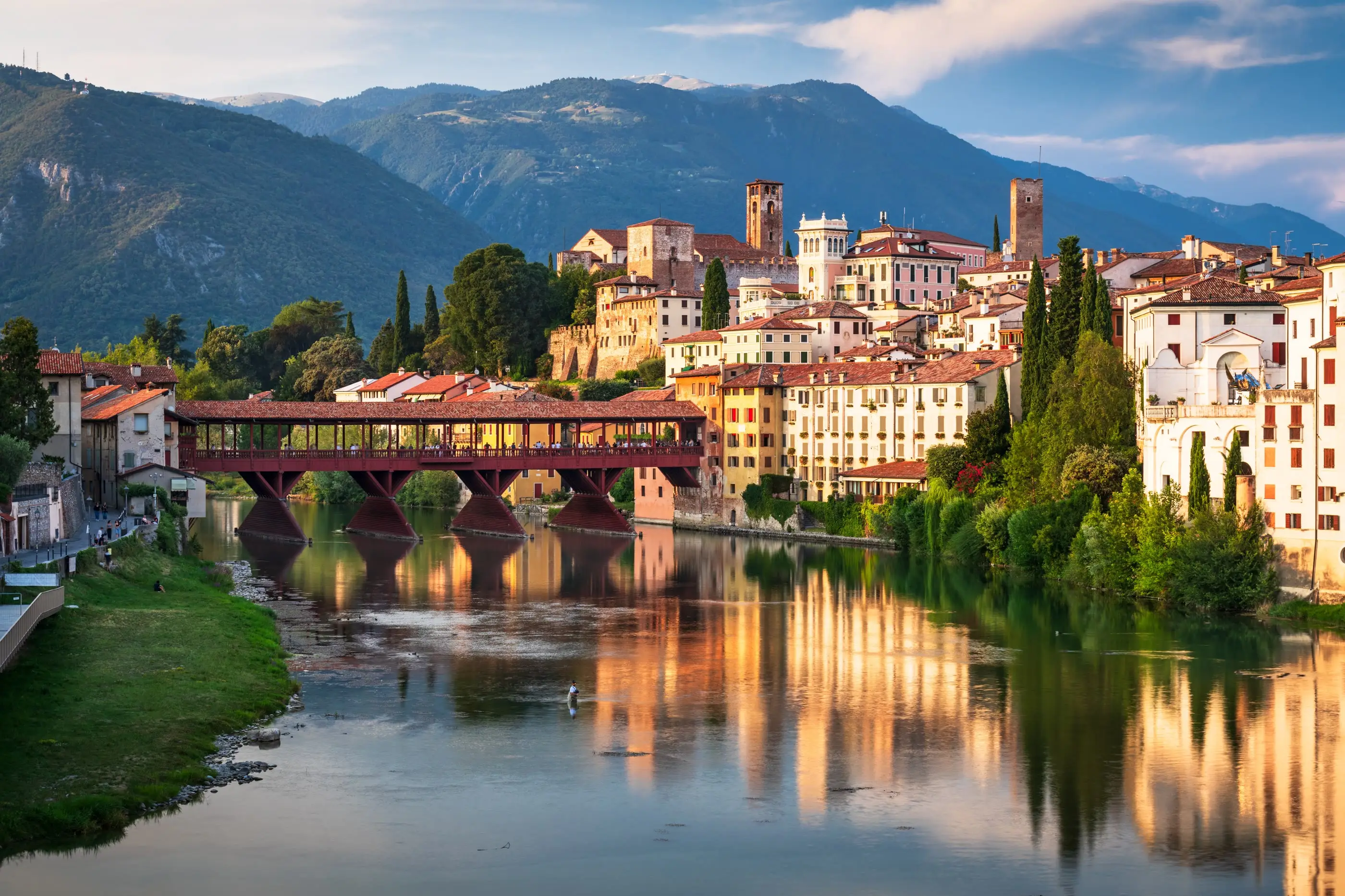
Explore the hill towns Spend a morning in Conegliano, with its castle and frescoed streets, then follow the hills west to Valdobbiadene. In between are villages like Follina, with its medieval abbey, and Cison di Valmarino, with a castle watching over it. It’s like stepping back in time. These towns were once home to noble families, monks, and Venetian lords, and their castles, abbeys, and frescoed piazzas still tell the story.
Time it with a festival In spring, the hill towns take turns hosting the Primavera del Prosecco, with wine, food, and music. In September the harvest begins, and the whole area comes alive. Tell us your dates and we’ll tell you what’s on.
Where to have an aperitivo in the Prosecco Hills?
Aperitivo here comes with a view of the vines, so order a glass of the prosecco grown right outside.
Osteria Senz’Oste The famous “osteria without a host,” tucked among the vineyards near Valdobbiadene. There’s no one behind the counter. Help yourself to a glass and a few bites, leave what you owe, and enjoy the view.
Osteria di Collalbrigo A personal favorite, in the hills just above Conegliano. You’ll often find me here with friends and family, sharing cicchetti and a spritz. The views are beautiful, but the atmosphere is even better.
Where to eat in the Prosecco Hills?
Salis High above Valdobbiadene, with views across the vineyards toward the hill of Cartizze. Ask for a table by the window and enjoy the view.
Osteria dai Mazzeri In the center of Follina, tucked into a historic building that was once the town hall. Rustic and full of character, with traditional Veneto cooking, meat roasted on the spit, and tables outside in summer.
Andreetta Perched in the tiny village of Rolle, near Cison di Valmarino, with a wide terrace looking out over a natural amphitheater of woods and vineyards. Perfect for dinner outside on a summer evening.
When is the best time to visit the Prosecco Hills?
May and September are the peak months. In May, the hills are green, the days are warm but never hot, and the hill towns take turns hosting the Primavera del Prosecco. In September, the harvest begins and the vineyards start to turn gold.
But anytime from spring through fall is a wonderful time to go. Everything is open, the cellars are pouring, and there’s always something happening, from events at the wineries to summer festivals in the villages.
Winter is quieter. Many smaller cellars open by appointment only, but the hills are misty, cozy, and wonderfully peaceful, with the Dolomites white with snow just to the north.
Where to stay in the Prosecco Hills?
Make the hills your base for the week. From a villa among the vineyards, you can wake up to mist in the valleys, spend your days tasting and exploring, and still reach Venice, Treviso, Asolo, and the Dolomites on easy day trips. Our planning guide shows how far everything is.
Fallen for the hills already? See our villas in the Prosecco Hills, or tell us about your trip and we’ll help you plan it.
What to know before visiting the Prosecco Hills?
Opening hours Many small producers close on Sunday afternoons and all day Monday, and most visits are by appointment. The Strada del Prosecco is liveliest from Tuesday to Saturday.
Tasting and driving Italy’s legal limit is 0.05% blood alcohol, lower than the 0.08% in most of the US, and zero for anyone who’s had their license less than three years. Tasting pours are small, but they add up over a few cellars, so plan for a designated driver or let us arrange one.
Carry some cash Cards work almost everywhere, but small cellars and osterie are easier with cash, and many don’t take American Express.
Prosecco Hills FAQ
Where exactly are the Prosecco Hills?
The historic hills of Prosecco DOCG stretch for about 25 miles between Conegliano in the east and Valdobbiadene in the west, about an hour north of Venice, at the foot of the Dolomites. A second, smaller DOCG zone surrounds the hilltop town of Asolo.
How far are the Prosecco Hills from Venice?
About an hour. Trains run from Venice to Conegliano in about an hour, and the drive to Conegliano takes about the same, with Valdobbiadene a little farther.
Do you need a car in the Prosecco Hills?
For the hills themselves, yes. Conegliano is easy by train and on foot, but the cellars, viewpoints, and hill towns are spread out, and local buses are infrequent. A private driver is the easiest way to taste without worrying about driving.
How many days do you need in the Prosecco Hills?
A day trip gives you a taste, but the hills are best slowly. A week from one base gives you time for tastings, long lunches, and easy day trips to Venice, Treviso, Asolo, and the Dolomites.
Do you need to book winery visits in advance?
Yes. Most cellars here are small and family-run, so visits are by appointment, especially on weekends and during the harvest. Book a few days ahead, or let us arrange the visits for you.
Can you visit during the harvest?
Yes, and it’s one of the best times to come. Harvest usually runs from early September into early October, and the towns celebrate with festivals. Cellars are busy, so book visits early.
Are the Prosecco Hills good for families?
Very. Between farm animals, open space, and a handmade amusement park nearby, there’s plenty for kids to do. See our guide to the Prosecco Hills with kids.